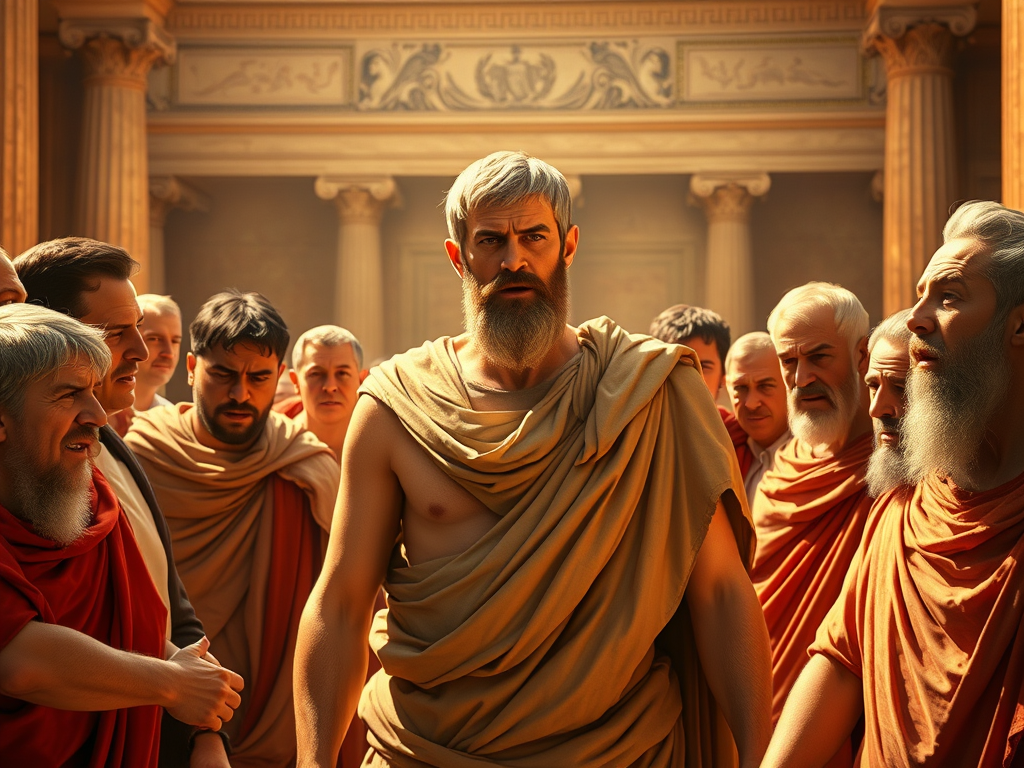
“It’s OK to punch a Nazi.” – Anonymous
We all have virtuous traits. We all have vices as well. Sometimes, we have both at the same time. I believe tolerance can be one of those. Let me explain.
Tolerance is the ability or willingness to accept and respect differences in opinions, beliefs, behaviors, or backgrounds, even when they do not align with one’s own views. It involves open-mindedness, patience, and the ability to coexist peacefully with others despite disagreements.
I believe tolerant societies are necessary for human development and growth. It separates good people from not so good people. However, while tolerance is generally seen as a virtue, excessive or misplaced tolerance can have negative consequences.
The Paradox of Tolerance is a concept introduced by philosopher Karl Popper in The Open Society and Its Enemies (1945). It states that if a society is overly tolerant, even of intolerance, then tolerance itself can be destroyed. In other words, if a society allows unlimited freedom of speech and action to intolerant ideologies (such as fascism or extremism), these ideologies may eventually take over and suppress tolerance altogether.
Imagine a democratic society that values free speech. A group advocating for the violent overthrow of democracy begins to spread hateful propaganda and incite violence. If the society allows this group to continue unchecked in the name of free speech, it risks letting them grow powerful enough to dismantle democracy and suppress the very freedoms that allowed them to exist in the first place.
Nazi Germany anyone? Modern day America anyone? Buehler, Buehler?
Popper argued that society must be tolerant, but not to the point that it tolerates the destruction of tolerance. He suggested that we should be willing to defend a tolerant society by limiting the rights of those who seek to eradicate tolerance and human rights.
The idea of intolerance of tolerance is needed in our world. We must cultivate society’s collective spine to say enough is enough. I don’t care if your ideas are different – I care if they’re evil.
This seems like such a foreign concept in today’s society. I mean, which elected officials unapologetically stand up in America to call the bullshit what is? There’s a few warriors – AOC, Jasmine Crockett, Bernie Sanders. However, the majority would rather wear pink and hold up silly signs in performance dances saying “look at me” than do the actual work.
Who can be our model for standing unwaveringly against racism, misogyny, hatred, and evil? Where is our modern day Cato?
Cato the Younger (95–46 BCE) was a Roman senator and statesman known for his unwavering integrity, commitment to Stoic philosophy, and staunch opposition to Julius Caesar. He was a descendant of Cato the Elder and became famous for his moral virtue, strict adherence to republican values, and unbreakable resistance to corruption and tyranny.
Cato was a key figure during the late Roman Republic, fiercely resisting the rise of Julius Caesar and the populist forces that threatened Rome’s traditional government. His life exemplified Stoic ideals of virtue, self-discipline, and duty, and he ultimately chose suicide over living under Caesar’s rule.
While many would point correctly, including Napoleon Bonaparte, that Cato’s death benefited no one but Caesar, Cato’s discipline and commitment cannot be questioned by anyone.
He had unbreakable resistance to corruption and tyranny. We could use just a little of that now. Some famous stories of this unbreakable commitment include:
- Refusing Bribes & Living Simply: Despite serving in powerful positions like quaestor (financial officer) and tribune, he never accepted bribes and lived a modest life.
- Standing Against Corruption in the Senate: As quaestor, Cato discovered widespread financial corruption in Rome’s treasury. Many officials had been embezzling funds, assuming no one would hold them accountable. Cato painstakingly audited records and prosecuted corrupt senators, making him feared by Rome’s elite. He returned large sums of stolen money to the treasury, proving his uncompromising moral standards. Even political allies found him difficult because he refused to bend the rules, saying: “Laws are not meant to be bent for personal gain but to be upheld for the good of all.”
- Fierce Opposition to Julius Caesar & the First Triumvirate: Cato saw Caesar, Pompey, and Crassus (the First Triumvirate) as a threat to the Republic. He blocked Caesar’s attempts to gain unchecked power in the Senate. When Caesar tried to pass unconstitutional measures, Cato filibustered for hours, forcing him to use violence to push them through. When Caesar proposed giving land to the poor, Cato opposed it not because he hated the poor, but because he saw it as a power grab. Caesar, frustrated, had Cato dragged out of the Senate by force, but Cato calmly returned and continued speaking. This moment defined his unyielding resistance to tyranny.
Why does Cato matter today? Because we need to find the resolution to become intolerant of what is happening. We need to find a deep commitment to push back in ways we are uncomfortable or seem not in line with “decorum.” I hate the phrase “unprecedented times.” Nothing is unprecedented, but adhering to the past simply because it’s the past is dumb. The way we’ve always done things hasn’t worked. It’s leading us to this moment. Time to do things differently, and we need a model.
Cato can be that model. His life embodies these principles:
- Integrity: He never compromised his morals for personal gain.
- Courage: He stood up to powerful enemies without fear.
- Discipline: He lived simply, free from material temptations.
- Freedom: He refused to live under a tyrant, choosing death over dishonor. This one should be done more metaphorically, just saying… as the old saying goes, become ungovernable.
His story remains a timeless symbol of resisting corruption, defending liberty, and living with principle.
So where have all the Catos gone?
If we’re asking in a broader sense—where are the modern “Catos”—I’d say they exist, but often not in the spotlight. The world tends to reward flexibility, compromise, and political maneuvering more than strict moral fortitude. However, we can still find them among whistleblowers, principled leaders, and those who resist corruption even at great personal cost.
It seems like our world is lacking people with the moral backbone and courage of a Cato—leaders who stand firm on principle, resist corruption, and act in the interest of justice even when it’s inconvenient or costly. Instead, we see a lot of people bending to power, chasing influence, or just going along to get along.
I think part of the problem is that Cato’s kind of integrity is uncomfortable. He didn’t play the political game; he refused to compromise his values even when it meant losing. In Cato’s time, there was a colloquial saying “We can’t all be Catos.” Given to the understanding his level of dedication to principle is hard to do and rare. Today, that kind of rigid virtue isn’t often rewarded—it’s seen as impractical, naive, or even disruptive. But the irony is, when enough people stand firm, they can shift the tide.
Maybe the real question is: how do we create more Catos? How do we build systems that reward virtue and not just power? And how do we personally embody that kind of courage in a world that often punishes it?
Ultimately, Cato was not against tolerance itself—he was against allowing intolerant forces like Caesar to exploit Rome’s tolerance. His actions reflect the hard decision societies must make: Do they allow dangerous figures to rise unchecked in the name of fairness? Or do they take action against them before it’s too late?
His suicide was a powerful statement that some principles—like liberty and justice—are worth defending, even at the cost of one’s own life. I hope it doesn’t come to that. But America is not immune to the vices of humanity that destroyed 1930s Germany or ancient Rome.
I hope we write a different ending in the histories. Start by punching a Nazi if you see one. Metaphorically, of course. But maybe, then again…
© 2025 HR Philosopher. All rights reserved.
 The HR Philosopher