“A cynic is a man who, when he smells flowers, looks around for a coffin.” — H. L. Mencken
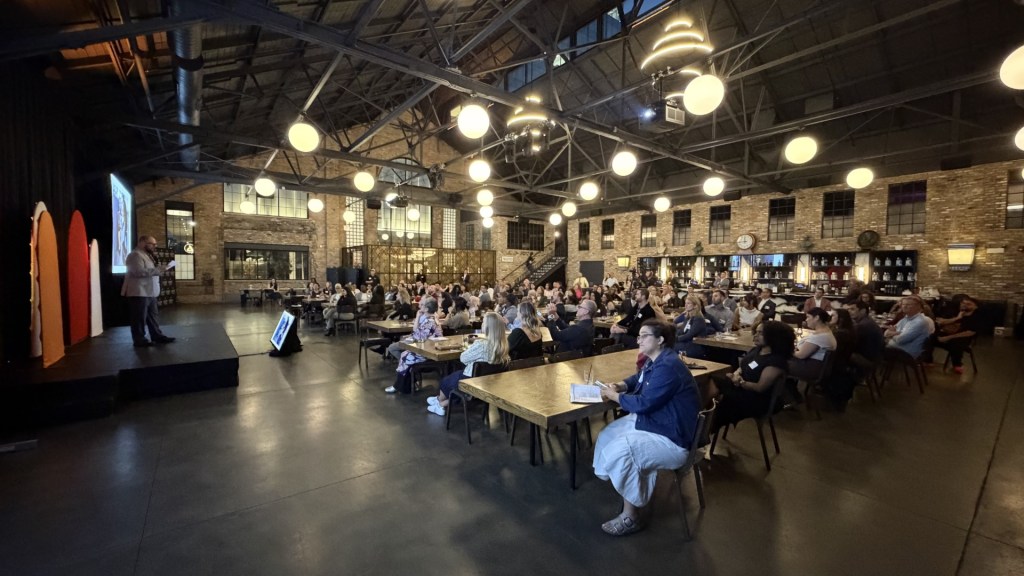
Last night, I attended DisruptHR Chicago—a gathering built around sharing ideas that challenge how we think about people and work. The format keeps things moving: Each speaker gets five minutes, with 20 slides advancing every 15 seconds. It makes for a different kind of HR event.
What I love most about DisruptHR is the spotlight it puts on everyday practitioners. DisruptHR focuses on the people doing this work, navigating its messiness, and learning as they go. It’s not polished and slick, and I love that. There’s something refreshing about hearing someone step up, share an idea they care about, and give the rest of us something to think about. That kind of energy reminds me why I enjoy this profession.
Below is the talk I gave. I think it’s an important message, so I share it with all of you! If you’re an HR pro and have a DisruptHR event near you, I STRONGLY encourage you to not only attend and support, but also to put in to speak! It’s a challenging event, but one that is ever so rewarding. You have something to share and to say, so do it in a room full of people who deserve to hear it!
_____________________________________________________________________
When I was eight, maybe nine years old, my mom and I would pass an unhoused man every time we drove to the Domonick’s grocery store. As the good Catholic schoolboy I was, I wanted to help this man.
So, I made sure I had a grocery bag of canned good—beans, corn, soup, and other perishables I could give him next time we went to the store. So, when the time came, I had my mom pull up to him, I leaned out and tried handing him the bag of canned food.
To my surprise, he refused the bag. I was taken aback. I was just trying to help. My mom, in an attempt to console me, said—more or less—he probably just wanted money so he could go to the liquor store. At the time, I thought this was a weird comment, but I was too young to know better. With hindsight, I see now how cynical this comment was. I don’t judge her. It was her view at the time. The world had done something to my mom, no matter how well intentioned her comment was. When the world breaks people, we tend to find cynicism in the broken shards.
Cynicism, the prevailing believe that nothing has merit and all is suspect. When applied to fellow human beings, we see enemies everywhere and nothing but ulterior motives. What a miserable way to exist. That misery has real world consequences. Cynicism is often toxic for our physical and mental health. Overtly cynical people have much poorer health, poorer habits, higher levels of chronic depression, and higher levels of serious illnesses like heart attacks and stroke.
I want to note a distinction, though: Cynicism assumes the worst and looks for reasons to dismiss a person or an idea. Healthy questioning challenges assumptions with curiosity, seeking understanding while remaining open to possibilities. We should always maintain a level of questioning our initial assumptions.
But for HR leaders this can eat away at us. We kinda have every justification for crumbling into a cynical lump of sinew and bone. For example, me? I’ve been yelled at countless times. Had items thrown at me. Been threatened with physical harm on several occasions. I’ve had serious accusations levied against me of things I just didn’t do.
And these behaviors, nonsense, don’t end at work.
- Historic income inequality,
- Epstein files,
- Rise of fascism,
- genocides,
- armed thugs disappearing our neighbors,
- rise of lynchings in the south,
- LGTBQ people demonized,
- college campus rape epidemic…
It’s so much.
In the second century, during the early morning or perhaps late evening on a battlefield far from Rome, the Roman Emperor Marcus Aurelius spent time writing to himself. Imagine a man who knew a lot about nonsense. The most powerful man in the world had sycophants constantly at his heels, and he hated it.
In what would become his “Meditations” he wrote:
“When you wake up in the morning, tell yourself: the people I deal with today will be meddling, ungrateful, arrogant, dishonest, jealous and surly. They are like this because they can’t tell good from evil. But I have seen the beauty of good, and the ugliness of evil, and have recognized that the wrongdoer has a nature related to my own – not of the same blood and birth, but the same mind, and possessing a share of the divine. And so none of them can hurt me. No one can implicate me in ugliness.”
No one can implicate me in ugliness.
Here we have the most powerful person in the world writing to himself reminders that people suck. But you know what, he told himself, I’m a person, too, and they can’t hurt me or implicate me in anything, unless I let them. Also, maybe it’s worth remembering that, as a person, I’ve probably sucked at times, as well.
And here’s the point. Cynicism is cowardice. It’s a way out. It’s justification for being the worst version of ourselves. Cynicism gives us permission to not care, to not be invested, to not own our part in the world – however small it is.
Leadership is finding a way forward. So, what have I done to help me keep the darkness at bay?
- Focusing on what I can influence. Cynicism grows when everything feels pointless; acting on what I truly control restores a sense of agency.
- Stay curious instead of assuming the worst. I ask, “What else could be true here?” before assigning people motives.
- Separate disappointment from distrust. A bad decision, failed project, or poor leader does not automatically mean everyone or everything is corrupt.
- Limit consumption of outrage porn. If my information diet repeatedly tells me that everyone is terrible, I start believing it.
- Practice constructive skepticism. Question ideas and systems, but remain open to being surprised, persuaded, or proven wrong.
- Replace contempt with compassion. You can disagree strongly with someone without reducing them to their worst behavior (within reason).
- Do something useful for someone else. Service, mentoring, volunteering, or simply helping a colleague can be a powerful antidote to helplessness and cynicism.
- And finally, choose hope as a discipline, not a prediction. Hope does not mean believing everything will work out. Hope isn’t a strategy, but it’s the only thing that helps us believe our actions are still worth taking.
Ultimately, cynicism destroys who we are and what we can be. The best way to combat this corrosion is to continue being what the world needs despite everything and everyone telling you the opposite. Have the courage to keep reaching your hand out to those who need help, even when they don’t reach back.
© 2026 HR Philosopher. All rights reserved.

